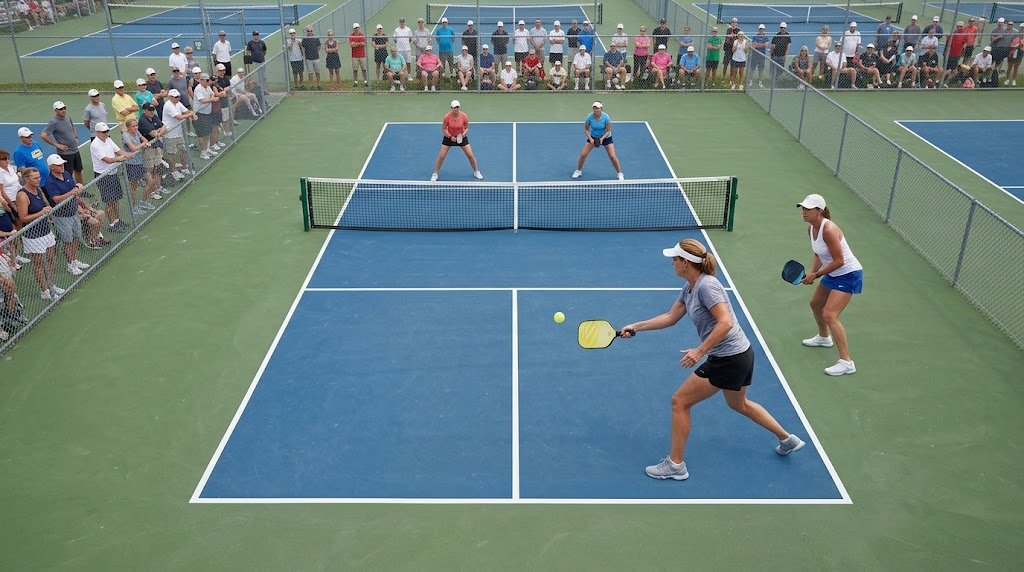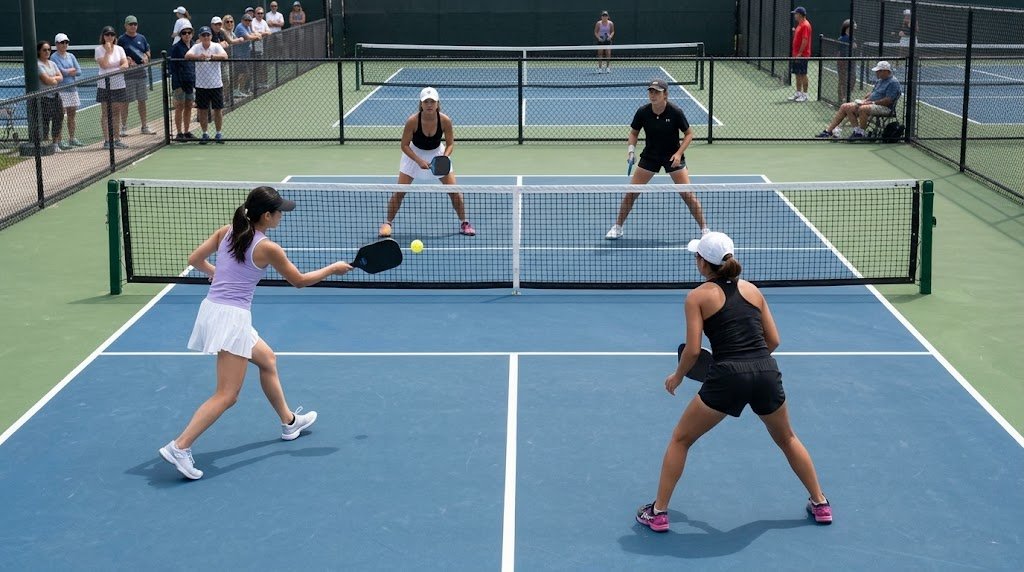

Nikki Choi and Rebecca Tan delivered a commanding performance in the Women's 4.0-4.49 Doubles division, securing an 11-9 victory over Debbie Beliveau and Barbara Jones. The match, recorded on September 20, 2026, showcased the winning duo's tactical precision and relentless pressure, turning a competitive opening into a decisive statement win. While the scoreline reflects a single-game contest, the margin of victory speaks volumes about Choi and Tan's ability to capitalize on critical moments, leaving no room for doubt about their superiority on the day.
The pre-match ratings offered a snapshot of the competitive landscape, with Beliveau entering at 4.388 and Jones at 4.134, while Choi (3.811) and Tan (3.786) were viewed as the underdogs. Yet, the final result underscored that ratings are merely numbers, not destiny. Choi and Tan's synergy, forged through countless hours of kitchen battles, proved to be the decisive factor. Their victory was not just about winning points; it was about rewriting expectations and proving that chemistry can trump individual pedigree.
The Kitchen Calculus
In pickleball, the kitchen is the epicenter of strategy, where every dink and volley carries weight. Controlling the non-volley line is paramount, as it allows players to dictate the rhythm of the rally without the risk of a fault. A well-placed dink, inches from the net, forces opponents to bend low, creating openings for a decisive put-away. Conversely, volleying illegally inside the kitchen—a violation that occurs when a player strikes the ball before it bounces on their side of the net—can turn a strong position into a costly error. Choi and Tan's mastery of this zone likely stemmed from their ability to stay behind the line, using the kitchen's boundaries as a shield rather than a trap. Their victory suggests they understood that patience, not aggression, often wins the day.
Fault Lines and Out-of-Bounds Risks
Every match carries the specter of errors, and in a high-stakes doubles encounter, the margin for mistake is razor-thin. A foot fault, where a player steps on or over the baseline before serving, can instantly shift momentum. Similarly, an out-of-bounds shot—whether a deep lob or a sharp cross-court volley—can gift points to the opposition. While the source does not record specific rallies or faults, the general principles remain: precision in serve placement and awareness of court boundaries are non-negotiable. Choi and Tan's ability to minimize these risks, even hypothetically, likely contributed to their 11-9 triumph, turning potential pitfalls into stepping stones.
What the Scoreline Reveals
An 11-9 result is more than a scoreboard shutout; it is a testament to resilience. Each point in this contest was a micro-battle, where the winning duo's consistency outlasted their opponents' flashes of brilliance. The single-game format meant there was no room for error, no second chance to recover from a bad set. Choi and Tan's victory, therefore, was not just about winning but about thriving under pressure. Their performance suggests that in pickleball, as in life, the ability to adapt and execute under scrutiny often defines the champions.
Looking back, this match serves as a reminder that ratings are snapshots, not prophecies. Choi and Tan's 11-9 win over Beliveau and Jones is a story of synergy over star power, of kitchen wisdom over raw talent. As the pickleball world continues to evolve, this result stands as a benchmark—a reminder that in the quest for victory, the smallest details often yield the greatest rewards.