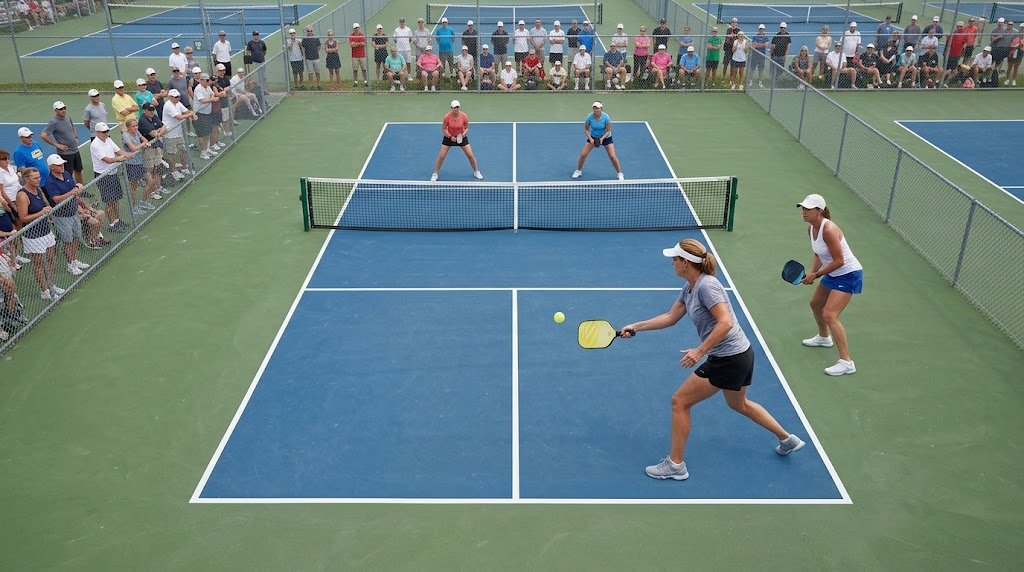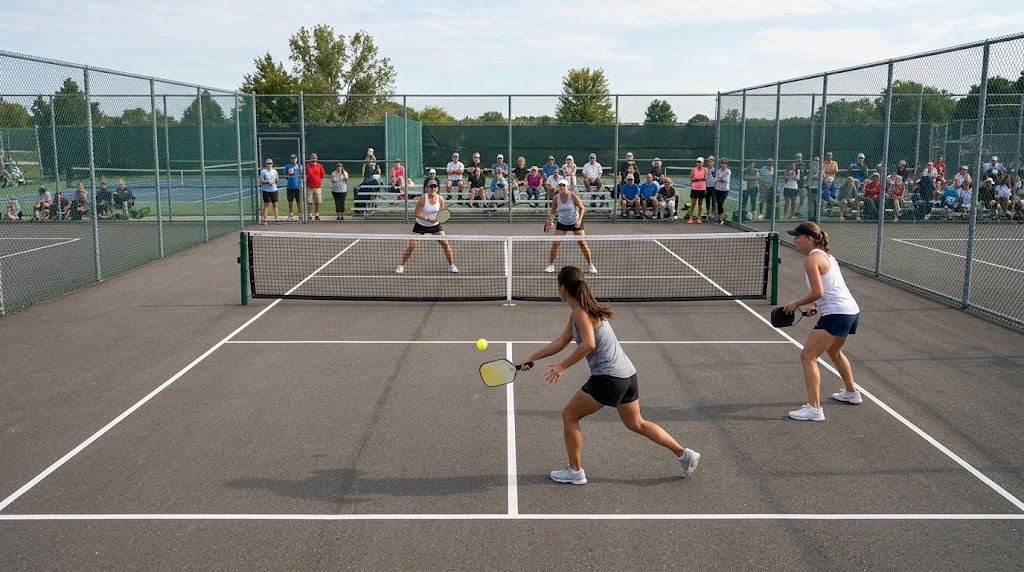

Julie Ree and Debbie Thai didn't just win—they announced themselves. In a Women's 4.0–4.49 Doubles showdown that crackled with precision and poise, the duo delivered a commanding 11–7 performance, turning the court into their personal stage. With pre-match ratings of 3.942 and 3.911 respectively, Ree and Thai entered as slight favorites, but they exited as the undeniable rulers of this particular slice of the pickleball pie.
The scoreline tells a story of control. Seven points for Kathryn Fitzgerald and Tammy Shaw is respectable, but in the face of Ree and Thai’s relentless consistency, it was never enough to mount a serious challenge. There were no wild comebacks, no dramatic tiebreaks—just a steady, surgical advance from the baseline to the net, executed with the kind of synergy that only hours of court time can forge.
The Kitchen Is Sacred
In pickleball, the kitchen is more than a zone—it's a battlefield of nuance. Controlling the non-volley line is the first rule of kitchen dominance. Players who master this boundary can dictate the rhythm, forcing opponents to either venture into the danger zone or retreat into defensive shells. Ree and Thai, by all indications from the scoreline, understood this. They didn't just play near the line—they owned it.
But owning the kitchen means knowing when not to volley. A volley struck from within the kitchen is illegal, a fault that can shift momentum in an instant. The key is patience: let the ball bounce, control the reply, and only then advance. This is where great doubles teams separate themselves from the merely good. They don't rush. They wait. They punish.
Dinks, Faults, and the Edge of Bounds
Dinks—those soft, drop-shot volleys meant to die just over the net—are the poetry of pickleball. They require touch, timing, and a feel for the ball's spin and speed. When executed well, they draw opponents forward, expose the gaps, and create openings for the kill shot. But dinks are risky. Too short, and they're easy targets. Too deep, and they sail out of bounds.
Faults, too, are the silent assassins of momentum. A foot fault on a serve, a double-bounce, an illegal volley—each can turn a winning point into a gift. And then there's the out-of-bounds risk, that ever-present specter that haunts every deep lob and angled drive. Players must balance aggression with restraint, knowing that one misstep can undo hours of careful positioning.
What the Score Says
This wasn't a match decided by a single spectacular rally. It was won through cumulative excellence. Every point Ree and Thai claimed was a brick in their wall. Every point conceded by Fitzgerald and Shaw was a crack in theirs. The 11–7 margin isn't just a number—it's a testament to superior court awareness, better shot selection, and the kind of chemistry that turns two individuals into one force.
The pre-match ratings hinted at this potential. Ree’s 3.942 and Thai’s 3.911 placed them just ahead of Fitzgerald (3.387) and Shaw (3.682), but ratings are snapshots, not prophecies. What matters is what happens when the paddles meet the ball. On this day, Ree and Thai made sure their rating was more than a number—it was a promise kept.
Straight games. A clean sweep. A statement. And as the dust settled on the court, one truth remained: in the world of competitive doubles, the kitchen belongs to those who respect it—and Ree and Thai just proved they were ready to rule.