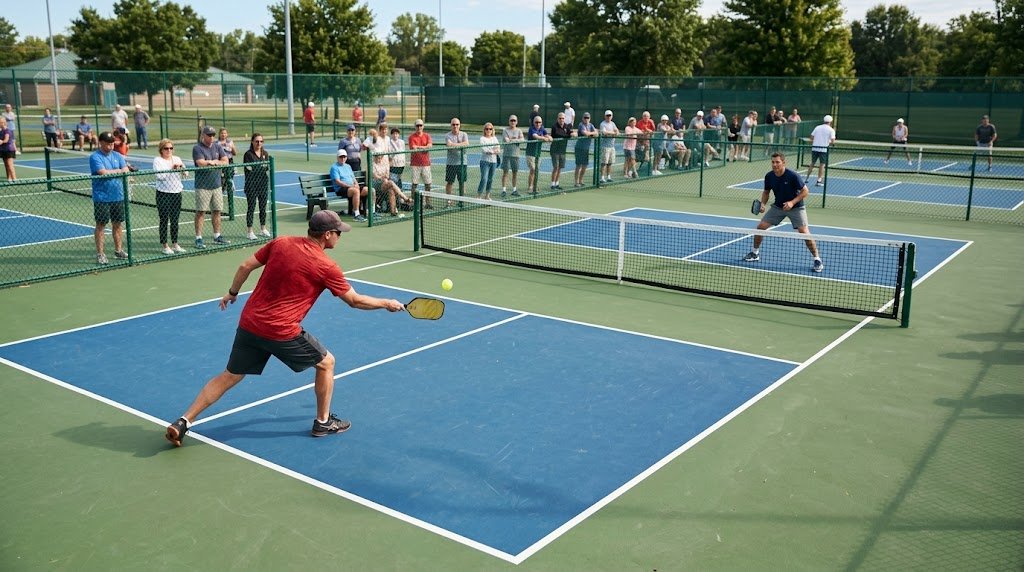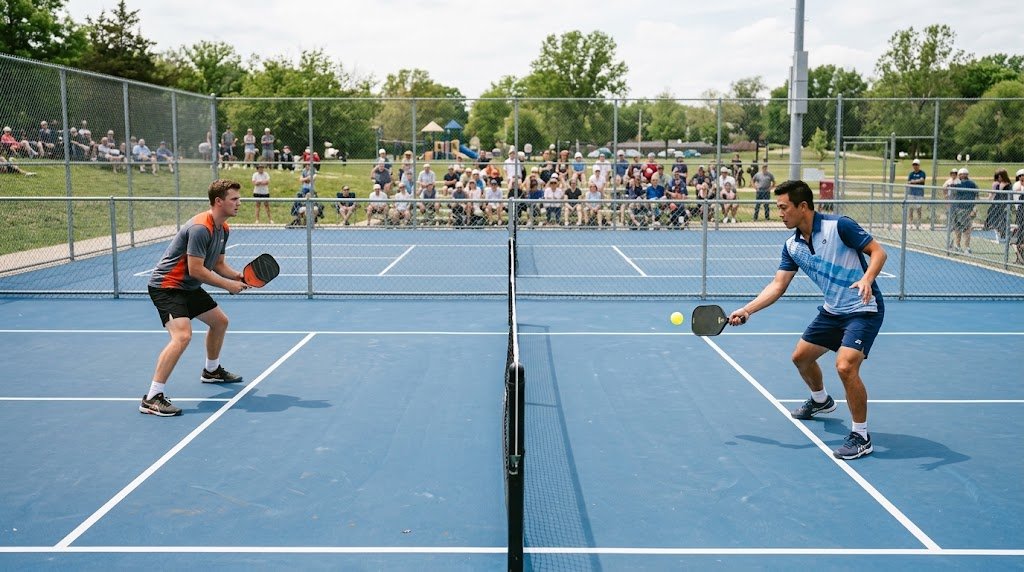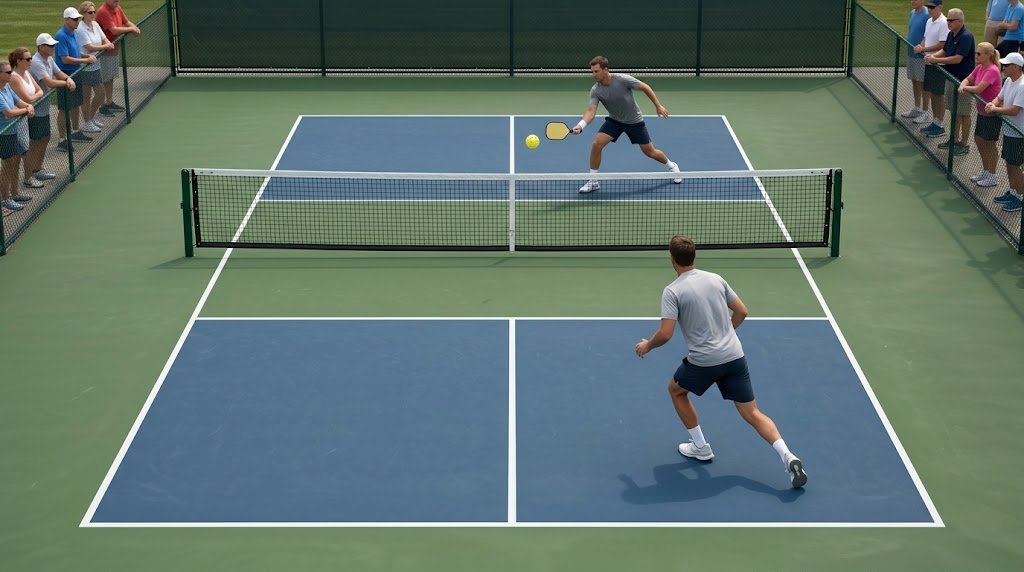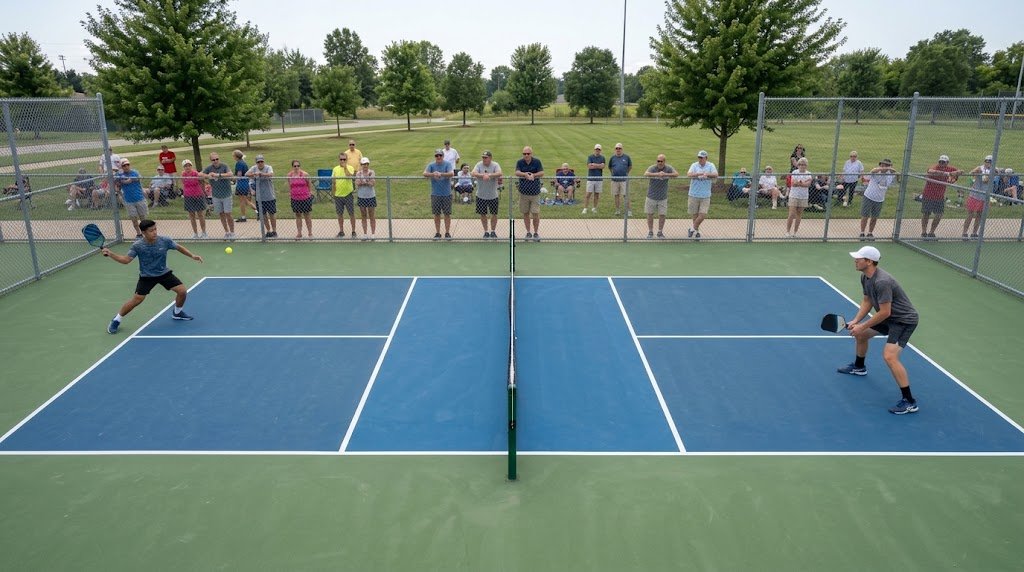
The WPA Long Beach Open delivered a sharp early statement in Open Men’s Singles, with Brandon Freed sweeping Landon Nguyen 11–5 in straight games. The result reflected a clear pre-match gap in ratings, with Freed entering at 3.629 and Nguyen at 3.025. For Freed, the win was a clean, commanding opening statement; for Nguyen, it was a competitive lesson in handling elite-level tempo.
Pre-Match Ratings Set the Tone
Before a single serve was tossed, the rating sheet already told a revealing story. Freed came in carrying a 3.629 pre-match rating, while Nguyen was marked at 3.025, a difference of 0.604 points that signaled a substantial gap in current ability. Those ratings were a snapshot of where each player stood at the time, not a forecast of future movement or a guarantee of how any match would unfold. Still, in a sport where feel around the kitchen and consistency under pressure matter so much, that margin gave Freed an obvious edge before the first dink dropped.
Commanding Control in Straight Games
Freed converted that pre-match advantage into a tidy 11–5 win, taking the match in straight games without letting the contest drift into uncertainty. The scoring margin was decisive, with Freed building a buffer early and then maintaining enough composure to keep Nguyen from clawing back into rhythm. Rather than treating it as a blowout, the frame read more as a controlled masterclass: Freed dictated pace, limited easy opportunities, and kept the harder edges of the match confined to short bursts. Nguyen had his moments, but Freed’s steadier handling of key exchanges kept the ledger tilted firmly in his favor.
Doubles-Team Context and Shot Selection
In WPA Open events, singles demand an especially complete skill set because there is no partner to split court coverage or rescue an off-position ball. Freed’s ability to hold shape across the full length of the court mattered just as much as his touch on softer balls, since any lapse could immediately be punished by a well-placed return. Nguyen, facing a sharper, more polished opponent, had to calculate each shot with extra care, knowing that a single loose ball could open the door to a punishing response. That pressure to be economical with energy and positioning is one of the defining challenges of high-level singles pickleball.
Kitchen Positioning, Dinks, and Fault Awareness
At this level, much of the match is decided away from the loudest exchanges. Controlling the non-volley line, often called the kitchen line, allows a player to threaten rallies with well-placed dinks while staying legally outside the zone where volleying is prohibited. The trick is maintaining that aggressive yet balanced posture: stand too far back and you surrender the net fight, step inside the kitchen on a volley and you risk an illegal kitchen violation, even if no specific infraction was recorded here. Dinks work best when they dip sharply over the net and force opponents to lift, while out-of-bounds risk grows every time a player attempts an aggressive angle without clear court awareness. These are general pickleball principles, not claims about any particular rally or fault in this match.
What This Win Signals Going Forward
For Freed, an 11–5 straight-games win against a rated opponent offers a useful confirmation of his current form at the WPA Long Beach Open. It is a data point, not a finished story, and the real test will be whether he can sustain this level when the draws tighten and the margins shrink. For Nguyen, the result may serve as a reminder that even a respectable showing can still leave room to sharpen details around touch, movement, and decision-making. In pickleball, as in many sports, today’s scoreboard is a snapshot, and the next page is waiting to be written.