Brandon Freed turned a 15-8 decision over Kevin Van into a crisp statement at the WPA Long Beach Open. The Open Men's Singles result, recorded on September 22, 2026, separated two pre-match ratings by just 0.422 points, yet the final score reads like a controlled run of space and composure.
A Clean 15-8
The WPA Long Beach Open singles match ended with Freed winning 15-8 over Van. Freed entered with a pre-match rating of 3.636, while Van's was 3.214. Those ratings are a pre-match snapshot, not current marks or a forecast of what either player might be rated next time.
The two-game singles context is simple: one game, one winner, one clear result. There is no second game to turn the account into a comeback drama. Van's eight points still matter as the score of a competitive opponent, but Freed's margin of seven makes the outcome a commanding singles performance rather than a thriller.
The Kitchen Is a Territory, Not a Trap
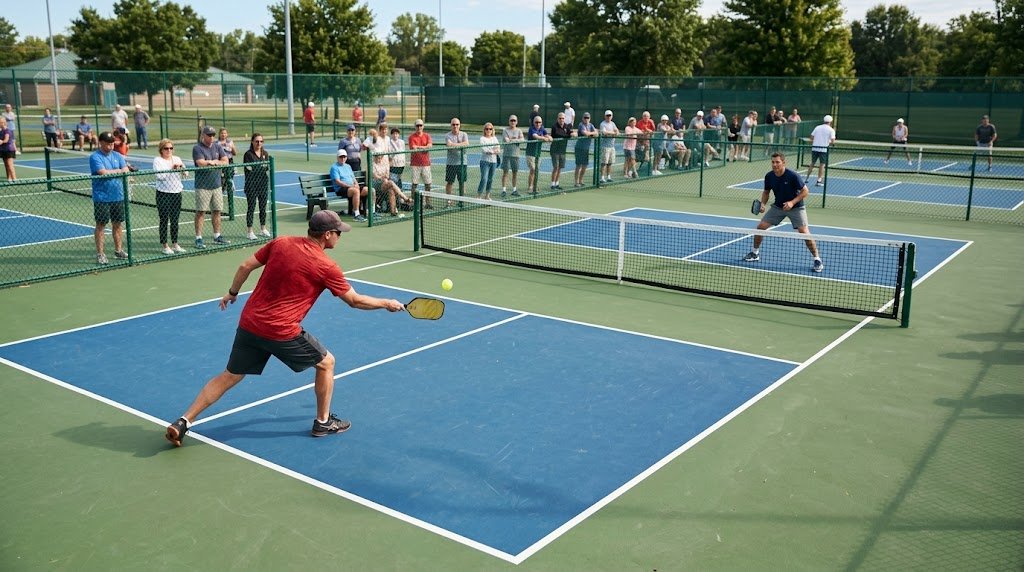
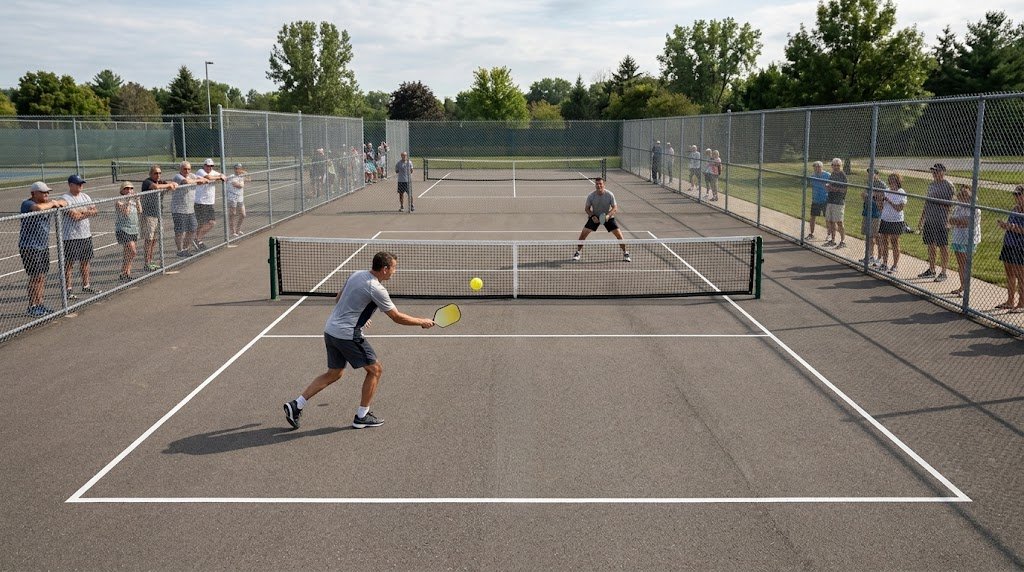
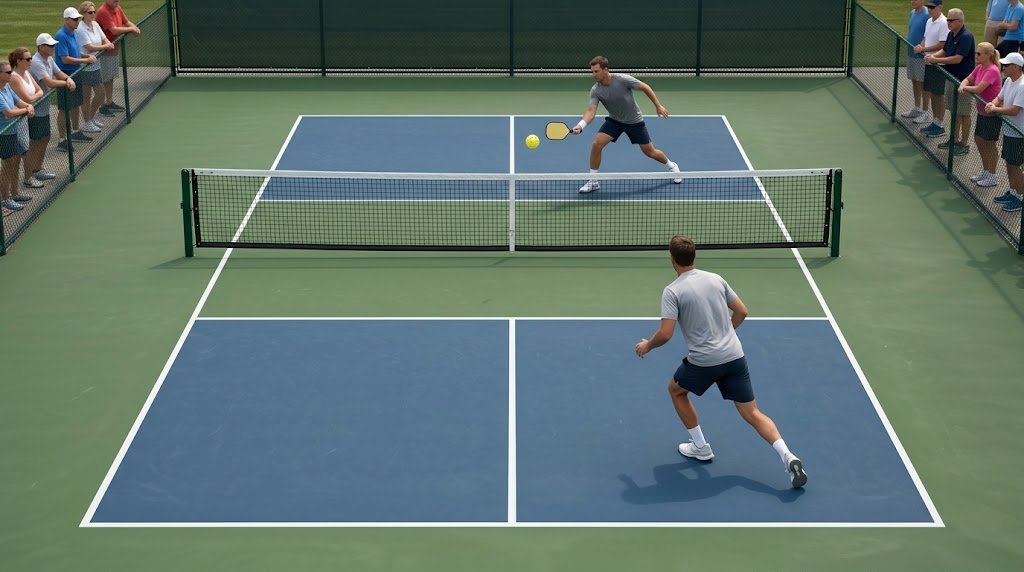
In doubles, the kitchen is the non-volley zone, and the line around it is part of the court's geography. A player who controls the non-volley line can often dictate the geometry of a point by stepping closer and making the opponent play upward or sideways. That is different from volleying inside the kitchen, which is an illegal move under the rules.
Controlling the line means choosing a position from which you can react quickly while respecting the no-volley boundary. Volleying illegally inside the kitchen is a specific fault, and the recorded result does not identify any such play. The useful lesson is spatial: a player can be aggressive near the kitchen without entering it with the racket or feet in a way the rules prohibit.
Dinks, the soft shots that keep the ball low over the net, are where that positioning pays off. A well-placed dink can pull an opponent forward, open a lane, or force a shot that leaves the kitchen vulnerable. A poorly managed dink, by contrast, can become a pop-up or an easy put-away. The point is not to hit every ball gently; it is to use touch, placement, and patience to make the next shot harder.
Out-of-bounds risk is the other side of the coin. A shot that is too steep, too short, or aimed at the wrong corner can sail past the lines or skid into the kitchen. The lines are not decoration: they define the legal territory, and a ball that lands outside them is out. That is why a player who controls the kitchen often has more choices and fewer mistakes to absorb.
The Margin Says It All
Freed's 15-8 win should be read as a straight-game result, not as a narrow escape. The seven-point margin gives the match its shape: a player with a higher pre-match rating converting that edge into a decisive score. The 0.422 rating gap is the statistical backdrop; the scoreboard is the story.
For players studying the result, the takeaway is practical. Own the non-volley line, use dinks to create angles, and treat out-of-bounds risk as a coaching problem to solve before the next point. Freed's win at the WPA Long Beach Open was not a mystery. It was a clean, confident 15-8 statement in Open Men's Singles.