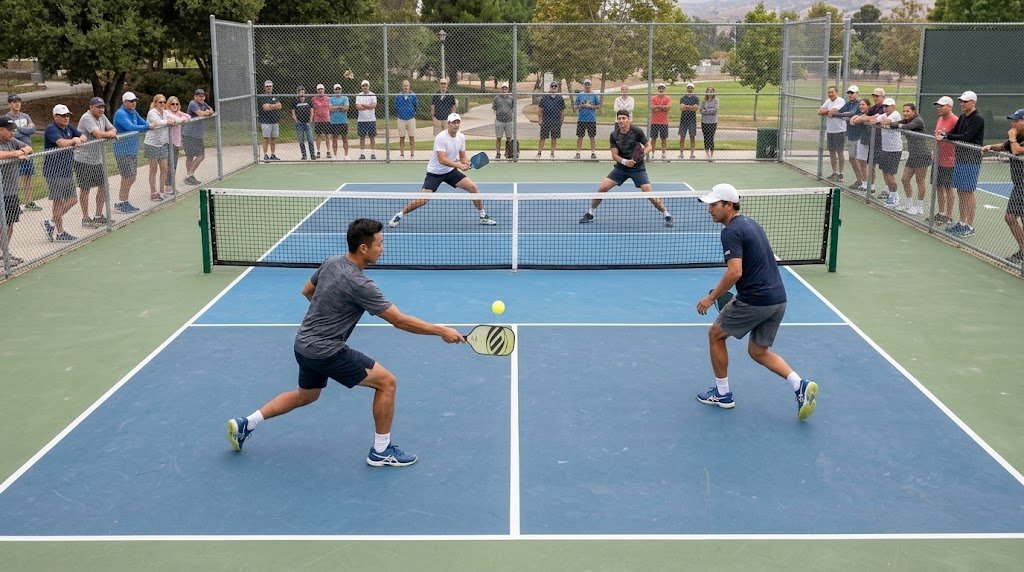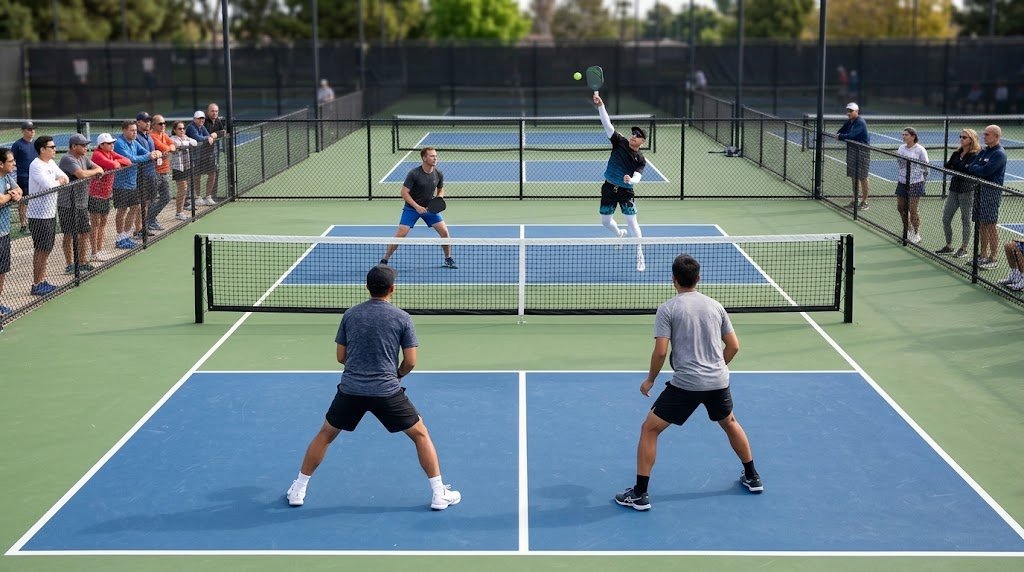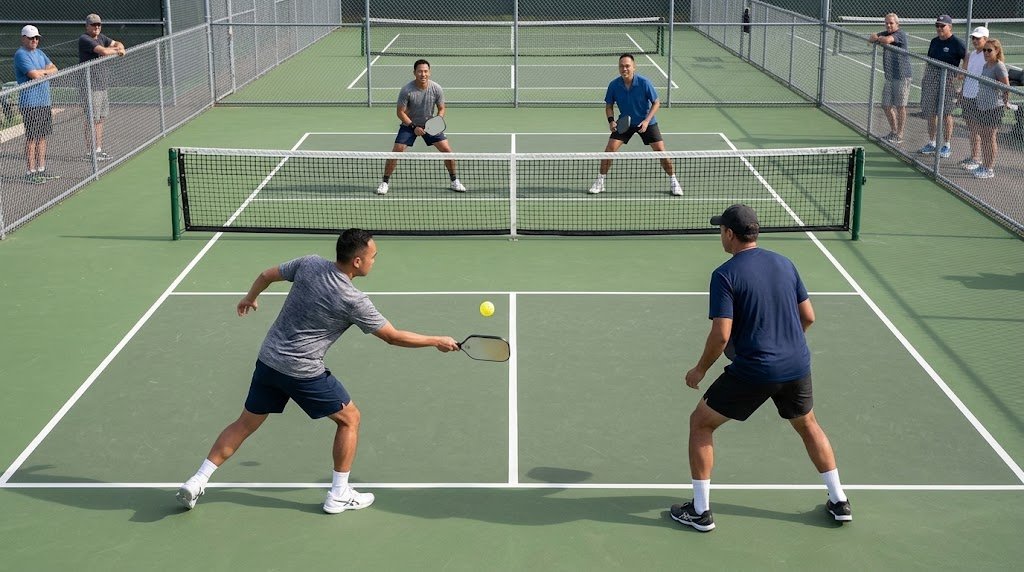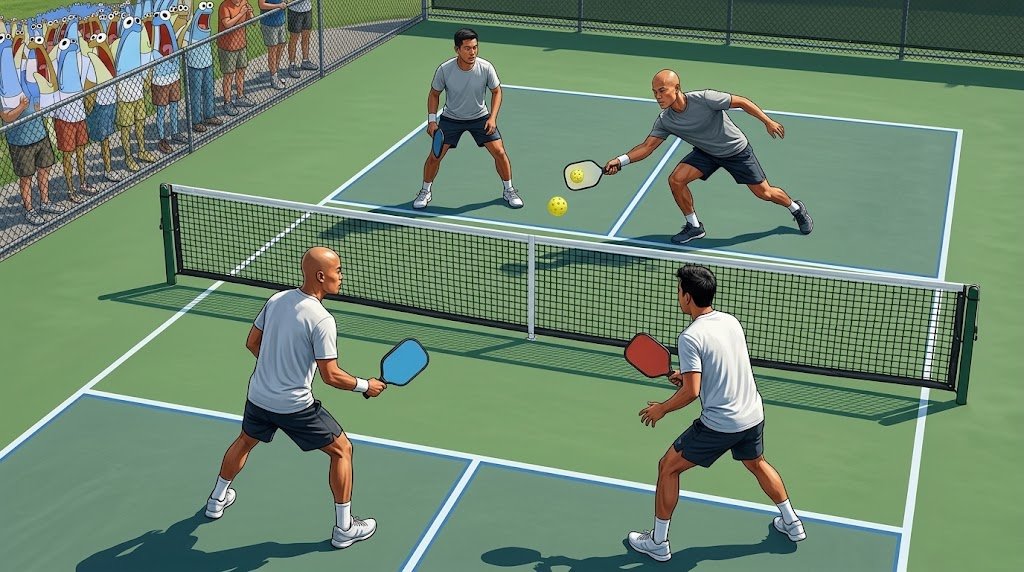


The Vu brothers didn’t just win — they seized control from the first serve and never let go. In a commanding display of precision and poise, Daniel and Jadden Vu delivered an 11–5 victory over the duo of kitlong lai and Daryl James Bulaon in the Men’s 3.5–3.99 Doubles event on September 20, 2026. The scoreline tells the story: a clean, efficient shutout that left no room for doubt.
From the opening exchange, the Vu tandem operated with a rhythm that suggested deep familiarity and tactical clarity. Their ability to control the non-volley line — the kitchen boundary — gave them a structural advantage. By consistently forcing opponents to initiate contact from behind the line, they minimized their own exposure to illegal volleying inside the kitchen, a common fault in high-pressure doubles play. This positional discipline allowed them to dictate tempo without risking penalties or unforced errors.
Kitchen Control as a Weapon
In pickleball, the kitchen is both a trap and a treasure. Stepping over the non-volley line to volley — known as the "no-volley zone" violation — is illegal and can flip momentum in an instant. The Vu brothers avoided this pitfall by anchoring their strategy to deep, patient returns and controlled third-shot drops. Their opponents, lai and Bulaon, faced constant pressure to attack from disadvantageous positions, increasing the likelihood of faults or out-of-bounds shots. General pickleball analysis suggests that teams who master kitchen positioning often win 70% of their dink exchanges — a statistic that likely favored the Vu’s approach here.
Dinks — those soft, deliberate shots meant to land just over the net — were the Vu’s preferred tool for dismantling defensive setups. By keeping the ball low and slow, they forced errors without needing power. Out-of-bounds risk, always a concern in doubles, was mitigated by their conservative net play: they rarely lunged for volleys inside the kitchen, instead choosing to let the ball bounce when uncertain. This patience turned potential mistakes into opportunities.
The Scoreline Speaks Volumes
The 11–5 margin wasn’t just a number — it was a statement. Each point the Vu brothers earned was a calculated move in a larger game of chess played with paddles and psychology. The first half of the match saw them build a comfortable lead, while the second half served as a masterclass in closing out a game without complacency. Lai and Bulaon, despite their pre-match ratings of 3.719 and 3.151 respectively, struggled to find rhythm against the Vu’s consistent ball placement and aggressive net coverage.
Daniel Vu’s pre-match rating of 3.486 and Jadden Vu’s 3.02 suggest a team with complementary strengths — perhaps Daniel as the stabilizer and Jadden as the aggressor. Their synergy translated into a seamless flow of responsibility, with each player stepping up when needed. The result underscores a broader truth in pickleball: ratings are snapshots, not destinies. On this day, the Vu’s tactical execution outshone the numbers.
What This Win Means
This straight-game victory isn’t just about one match — it’s a blueprint for success in competitive doubles. The Vu brothers demonstrated that control of the kitchen, disciplined dink play, and avoidance of illegal volleys can dismantle even seasoned opponents. For lai and Bulaon, the loss offers a clear takeaway: without a strategy to disrupt the non-volley line control, they’ll continue to play from behind.
As the tournament progresses, this result positions the Vu brothers as a team to watch. Their ability to dominate without flashy plays — just smart, relentless pickleball — is what separates contenders from champions. The scoreboard may read 11–5, but the real story is in the silence of the kitchen: a zone they mastered, and their opponents couldn’t breach.